Sustainability and resource efficiency are becoming increasingly important in order to achieve ambitious energy transition targets and implement related decarbonisation projects in the property sector. The concept of smart buildings is becoming increasingly important in this context.
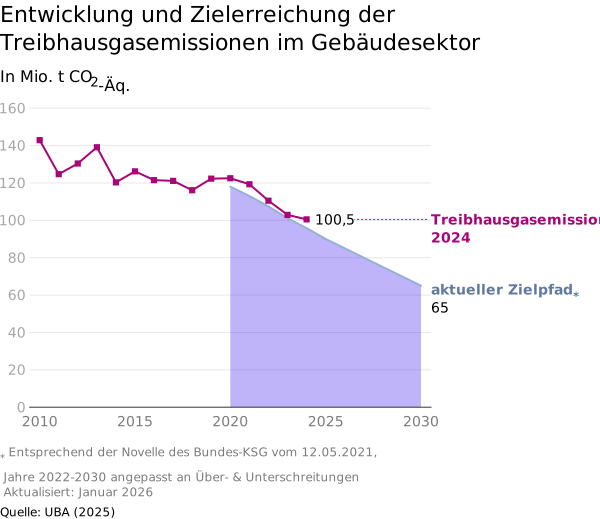
The dena Buildings Report 2026 shows that the buildings sector is still failing to meet its climate targets. Here are the developments that are now relevant to the housing sector – from renovation rates and heat pumps to data quality and strategic portfolio development.
How are CO₂ costs allocated between tenants and landlords? This article explains the legal requirements of the CO₂ Cost Allocation Act (CO₂KostAufG), the 10-step model, and the impact of rising CO₂ prices on heating costs, billing and the economic viability of building portfolios.
Much of the potential for efficiency in the existing building stock remains untapped due to a lack of reliable operational data. This article explains why transparency regarding the actual operation of systems is becoming the foundation of the heating transition, and what role digital infrastructure plays in this.
Between climate protection and economic efficiency: data-driven strategies for the housing sector. Online panel discussion as part of the Berlin Energy Days. Watch the recording now.
Many existing heating systems operate with incorrectly set heating curves – this wastes energy and reduces the effectiveness of other optimisation measures. Part 3 of our series shows how real operating data can be used to make informed decisions about heating curves – and why monitoring and smart thermostats form the basis for this.
Heating monitoring creates transparency about actual system operation. It shows where systems are inefficient, where settings are incorrect and where energy is being lost. But transparency alone does not change anything. The crucial question is: How can these findings be effectively transferred into ongoing operations in a heterogeneous building stock? A key variable here is hydraulic balancing – a well-known tool that is often inadequately implemented in practice.
Understanding heat supply before optimising: Many existing buildings lack reliable data on the actual performance of their heating systems, which makes any optimisation a shot in the dark. This article shows why digital heating monitoring is becoming the foundation of modern operations management: it creates transparency about the real condition of the system, enables data-based decisions and is a prerequisite for effective, economically viable efficiency measures in the housing industry.
Traditional refurbishment measures are costly, complex and rarely scalable in the short term. At the same time, regulatory pressure, CO₂ costs and ESG requirements continue to rise. In this interview, Dr Dirk Then, CEO of the noventic group, explains why data-driven transparency in heating system operations is the key lever for efficiency in existing buildings – and why digital solutions are no longer an optional add-on, but a prerequisite for an economically viable heat transition.
While the Christmas season is a time for joy and celebration, it is also a time when many individuals and families face challenges in fulfilling their wishes. It is therefore particularly gratifying when support is provided in a way that is responsive to identified needs. In 2024, the employees of the noventic group once again participated in the campaign „Aktion Tannenbaum“ organised by the Der Hafen hilft! association. This initiative aimed to bring a little Christmas joy to people in social institutions.
The energy performance certificate is an important document for the energy rating of properties. It documents the actual energy consumption of a building over a period of three years. It provides precise data on energy consumption per square metre and year for heating and hot water. As a transparent tool, it enables an informed assessment of energy efficiency, identifies potential savings and is therefore an important basis for planning refurbishment measures. In a market environment of rising energy costs, decarbonisation pressures and the growing importance of climate change mitigation measures, the energy performance certificate is an important indicator for property owners, as well as an important location indicator for buyers and tenants.