Consumption certificate for greater energy transparency
The energy performance certificate is an important document for the energy rating of properties. It documents the actual energy consumption of a building over a period of three years. It provides precise data on energy consumption per square metre and year for heating and hot water. As a transparent tool, it enables an informed assessment of energy efficiency, identifies potential savings and is therefore an important basis for planning refurbishment measures. In a market environment of rising energy costs, decarbonisation pressures and the growing importance of climate change mitigation measures, the energy performance certificate is an important indicator for property owners, as well as an important location indicator for buyers and tenants.


Consumption certificate vs. demand certificate
When it comes to assessing the energy performance of buildings, there are two types of certificate available: the consumption certificate and the demand certificate. Both serve the same purpose, but differ in their approach.
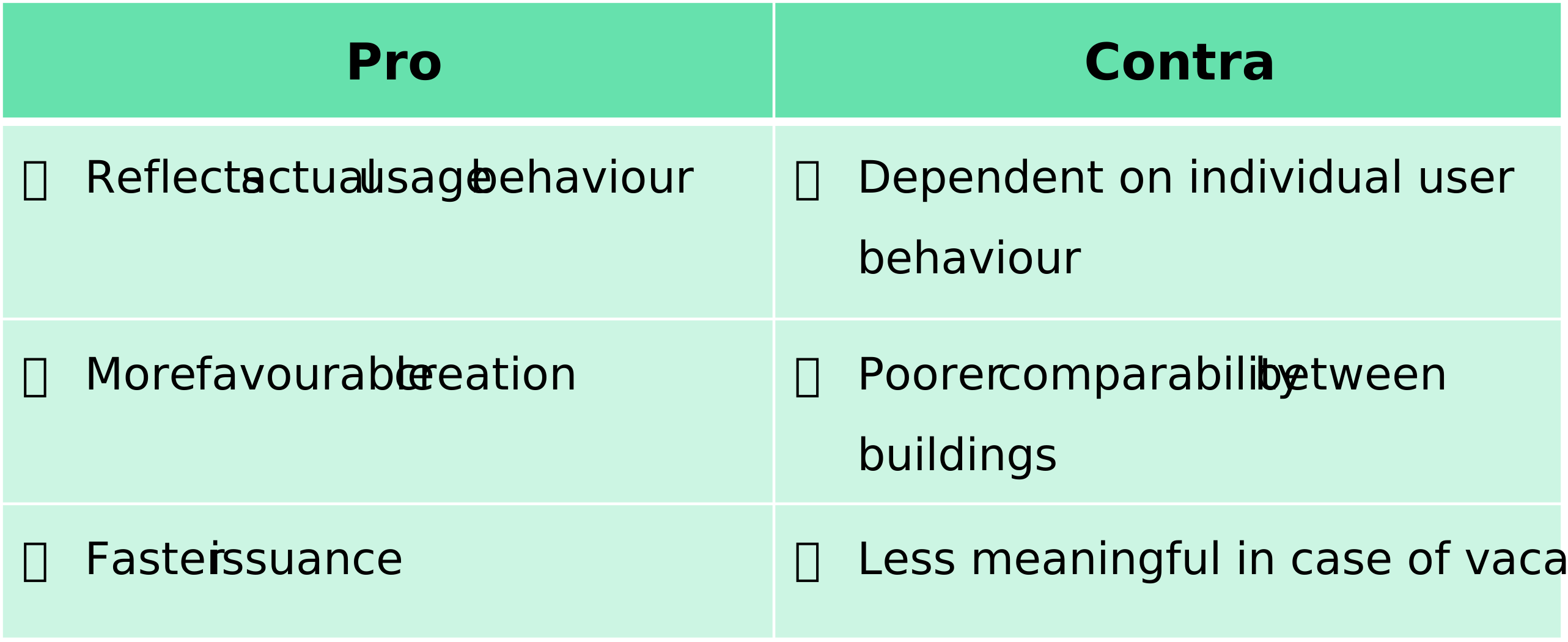
The consumption certificate is based on the actual energy consumption of a building over the last three years. It reflects the actual usage behaviour of the occupants and also takes into account external factors such as the weather. This makes it particularly realistic and practical. However, it can be distorted by different user behaviour or vacancies. The consumption certificate is particularly suitable for buildings with similar usage patterns, such as apartment blocks.
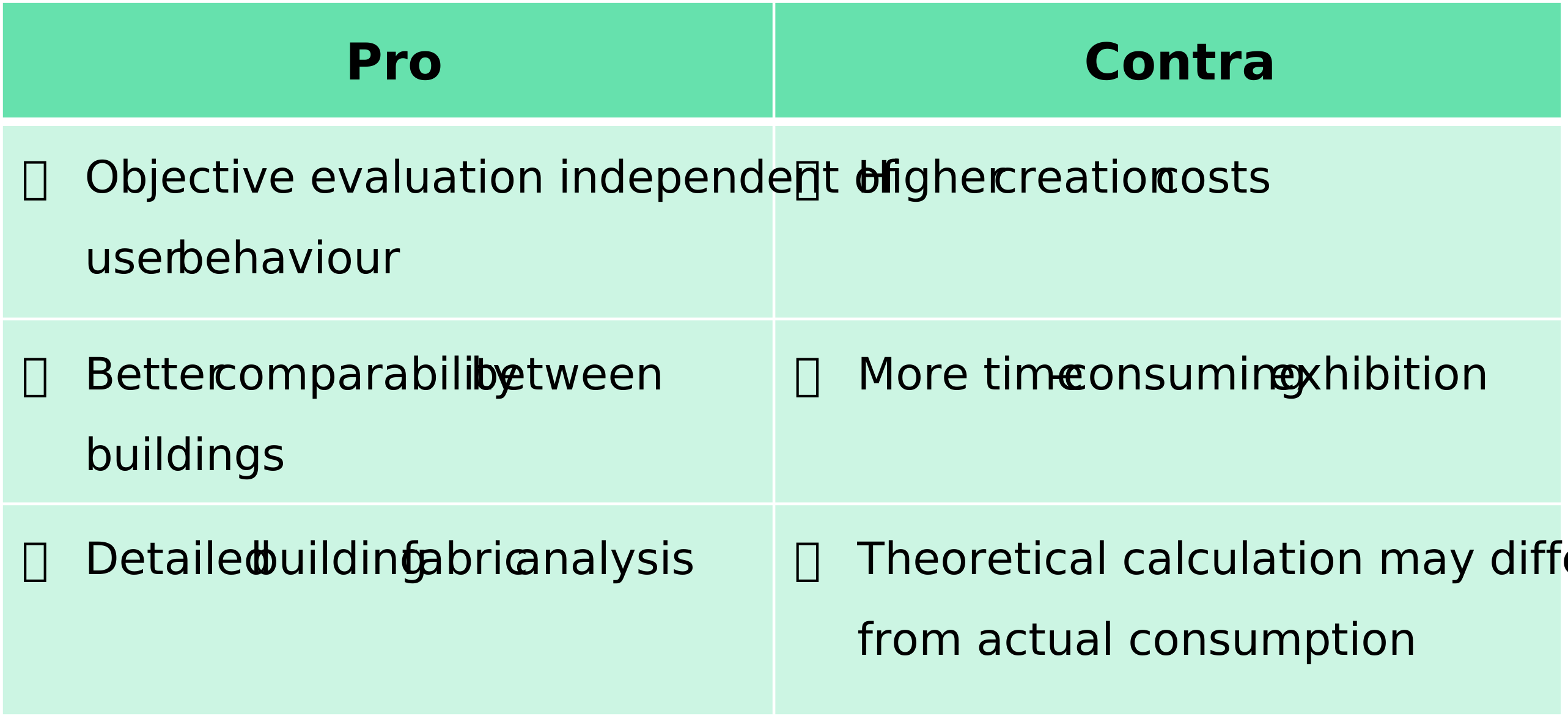
The demand certificate, on the other hand, determines the theoretical energy demand based on the building's structural characteristics and system technology. It calculates how much energy the building would need under standardised conditions - regardless of actual individual user behaviour. The energy performance certificate thus provides information on the quality of the building, which is particularly useful when considering refurbishment.
At a glance:
Consumption certificate
Demand Certificate
Legal basis & requirements
At a glance:
Consumption certificate
- Building application after 1st of November 1977
- Older buildings modernised in accordance with the Thermal Insulation Ordinance
Demand Certificate
- Building application before 1st of November 1977
- No modernisation under the Thermal Insulation Ordinance
Energy performance certificates can only be issued by qualified professionals. These include architects, engineers and energy consultants with the appropriate expertise. They guarantee a professional assessment of the property.
Both certificates are valid for 10 years. However, after major energy renovations, a new certificate must be issued regardless of this period to reflect the improved energy efficiency.
Since the introduction of the Energy Saving Ordinance (EnEV) in 2002, the Energy Performance Certificate has been mandatory for certain buildings, although the requirements have been tightened over time. Today, it must be presented when a building is sold, rented or leased, and provides potential buyers or tenants with valuable information on expected energy costs.
The colour scale of the consumption certificate ranges from dark green (very energy efficient) to dark red (energy problematic) and makes the energy efficiency of a building comprehensible at a glance. This visualisation helps to present complex energy relationships in an understandable way.
This data is required for the issue of a certificate of consumption
Various details about the property are required to create a consumption certificate:
- Full address
- Year the building was constructed
- System technology
- Living area
- Number of units
- For blocks of flats: Information on vacancies
- Heating and fuel consumption data for the last three years
(Note: This information is climate-adjusted to compensate for annual weather variations and to provide an objective assessment).
Consumption certificate costs
The costs for a consumption certificate are made up of standard and additional services.
Standard services
Preparation of an energy performance certificate/residential building: approx. 108 €*
Note: This base price may vary depending on the size of the property, the complexity of the heating system and other factors.
Additional services
Processing fee for third-party buildings: approx. 12 €*
Corrections to the energy performance certificate: approx. 43 €*
Note: Prices may be higher for larger properties or more complex systems.
* Net figures
Conclusion: An instrument that pays off
Investing in an energy performance certificate is not only a legal requirement, but also pays off in several ways: it creates legal certainty and provides valuable information on potential savings. These can lead to significant cost savings in the long term, as well as reducing the building's carbon footprint.
A good consumption certificate is therefore more than just a legal obligation: it is an important tool for greater transparency and sustainability in the building sector - for owners and tenants alike. With intelligent solutions such as those offered by noventic, this transparency can be expanded even further, paving the way for truly climate-smart properties.


Thomas Ahlborn
Head of Corporate Marketing, noventic group
Since 2013, Thomas Ahlborn has held various positions for companies of the noventic group, focusing on the theme of new supply concepts for neighbourhoods and buildings.


